
Data and Research6th November 2026
Police in England and Wales recorded 3,145 Honour-Based Abuse (HBA) offences in the year ending March 2026, representing the highest annual figure since comparable records began in 2020–21.
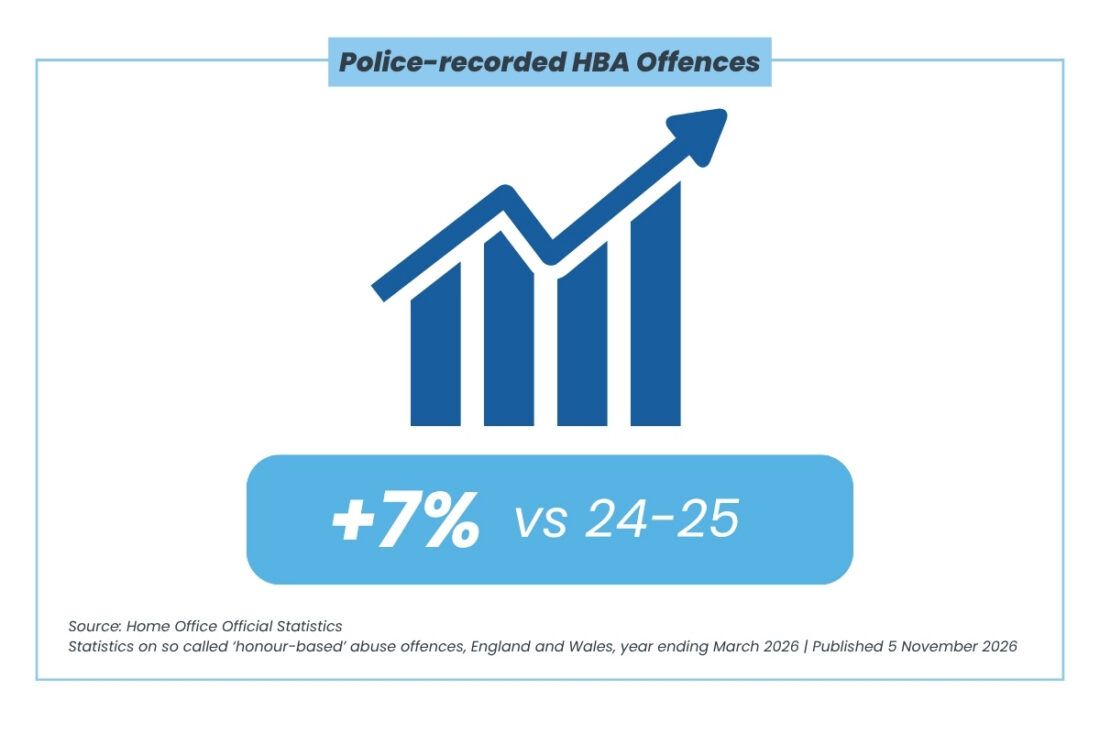
The latest Home Office statistics, published on 5 November 2026, show a 7% (196) increase in offences compared with the previous year.
The figures also reveal increases in recorded Forced Marriage and Female Genital Mutilation (FGM) offences, while controlling and coercive behaviour continues to account for a significant proportion of HBA-related crimes.
1/4
1/4
The headline figures:
- 3,145 Honour-Based Abuse offences, up 7% from 2,949 in 2024–25.
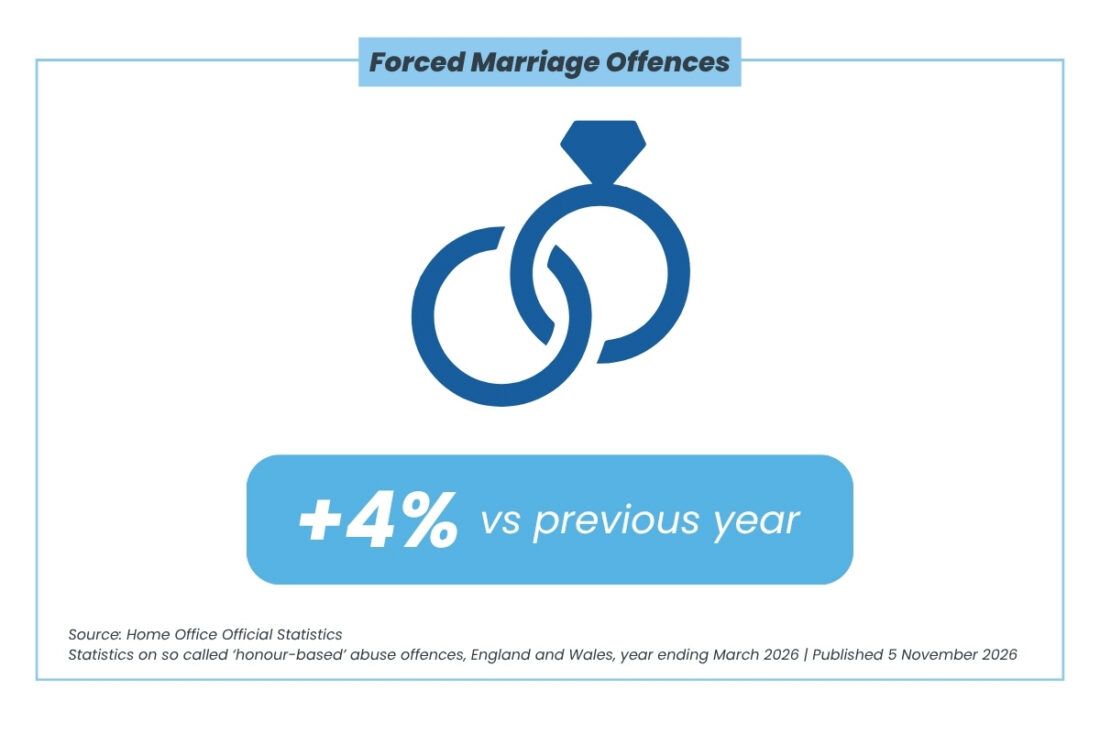
- 129 forced marriage offences, compared with 125 the previous year.
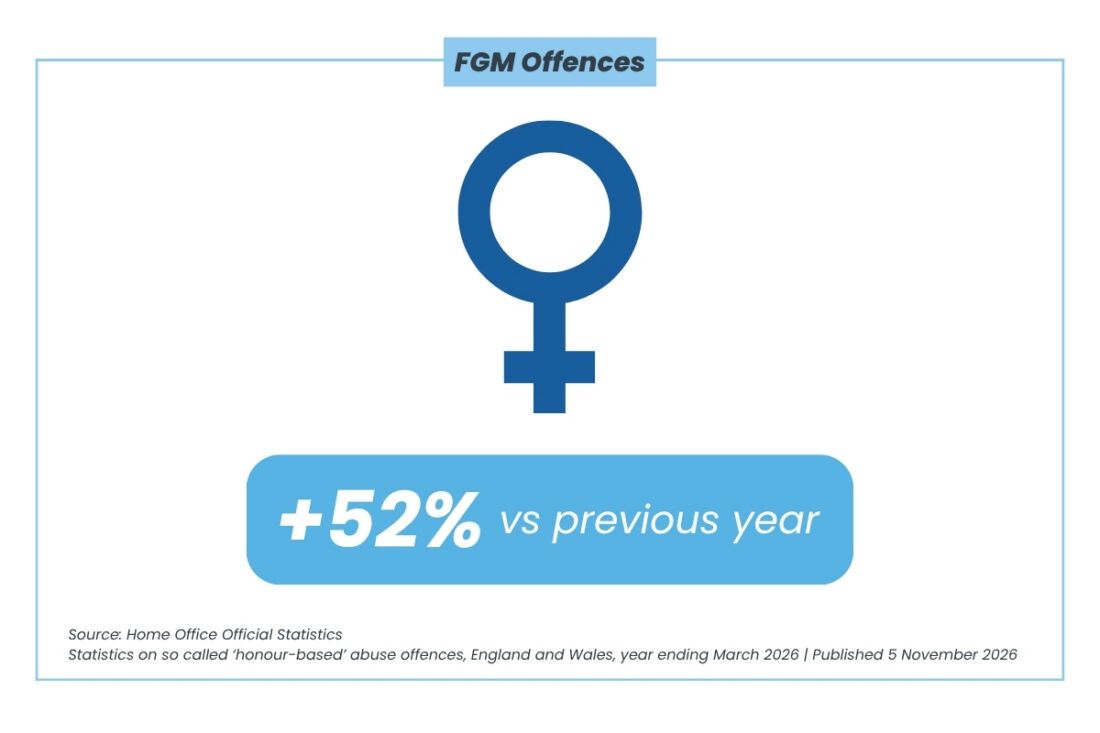
- 166 FGM offences, up 52% from 109 in 2024–25.
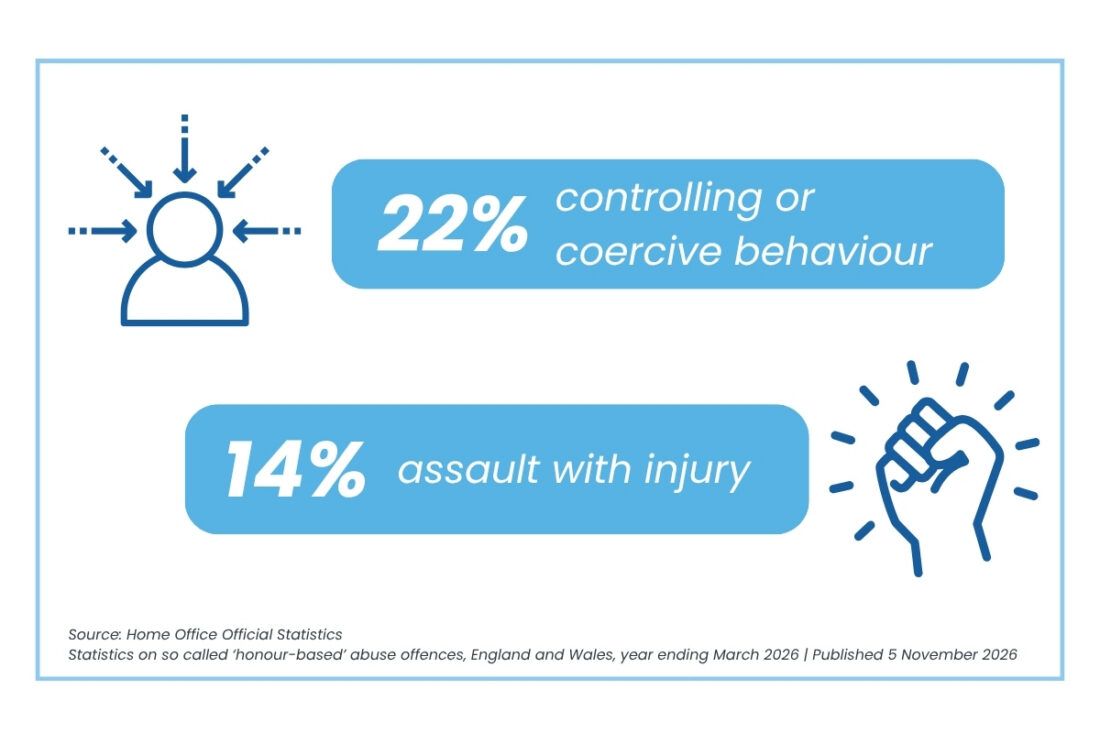
- 22% of HBA offences involved controlling and coercive behaviour.
- 14% involved assault with injury.
Police also recorded 2,001 HBA-related incidents that did not result in a recorded crime, a slight decrease from 2,047 the previous year.
Police-recorded Honour-Based Abuse offences have increased for three consecutive years, representing a 14% (390) rise in recorded offences over two years, however trends differ across the individual offence categories.
Forced Marriage offences
Police recorded 129 forced marriage offences in 2025–26, compared with 125 the previous year. While this represents a small annual increase, it remains substantially below the number of offences recorded in 2023–24.
The figures demonstrate that recorded forced marriage offences can fluctuate significantly between years.
Female Genital Mutilation offences
FGM offences increased by 52% (109 in 2024–25 to 166 in 2025–26) – the highest annual figure since comparable records began.
Of the 166 offences, 85 were recorded following referrals under the FGM mandatory reporting duty, which requires specified professionals to report known cases involving girls under 18 to the police.
The Home Office cautions that the relatively small number of FGM offences means annual figures can be particularly sensitive to changes in identification and recording practices.
Controlling and coercive behaviour remains a leading offence category
More than one in five police-recorded Honour-Based Abuse offences (22%) involved controlling and coercive behaviour. Assault with injury accounted for a further 14%. These figures highlight the range of criminal offences associated with Honour-Based Abuse, which can include physical violence, psychological abuse, threats, intimidation and coercion.
Honour-Based Abuse is not a single criminal offence. Instead, police identify offences as HBA-related where they involve abuse connected to perceived breaches of family or community expectations.
Where are offences being recorded?
The top three Police forces were:
- The Metropolitan Police – recorded the highest number of HBA-related offences in 2025–26, accounting for 20% of the national total
- West Midlands Police – recorded 395 offences, and 13% of the national total
- Greater Manchester Police – with 254 offences and 8% of the national total
Together, these three police forces accounted for approximately 41% of all recorded HBA offences in England and Wales. It is important to note that Police force areas vary in population size, and differences in identification and recording practices can affect the number of offences recorded, therefore this data should be interpreted cautiously.
The Home Office also specifically notes that changes to the Metropolitan Police’s recording systems are likely to have contributed to increases in identified offences in recent years.
A change in national terminology
The Home Office has also announced that future statistical publications will remove the phrase “so-called” from the title of its Honour-Based Abuse statistics. The change, which will take effect from the 2026–27 publication, follows representations from specialist organisations and survivors who raised concerns that the wording could be perceived as dismissive of victims’ experiences.
The revised title will use the term “Honour-Based Abuse”, reflecting terminology widely recognised by survivors and professionals.
Karma Nirvana’s Statement on the Latest Honour-Based Abuse Statistics:
Karma Nirvana welcomes the growing recognition of Honour-Based Abuse reflected in the latest Home Office statistics. While any increase in recorded offences warrants attention, these figures do not necessarily mean that Honour-Based Abuse itself is increasing. They may also reflect improvements in awareness, identification and reporting. For an abuse that has historically remained hidden, misunderstood and underreported, greater recognition is an important and positive step.“
“For over three decades, Karma Nirvana has worked to bring Honour-Based Abuse out of the shadows. Through our campaigning, survivor advocacy and training of thousands of professionals, we have consistently challenged the gaps in understanding that leave victims unrecognised and unprotected. Our successful Push for Change campaign, which secured a statutory definition of Honour-Based Abuse, represents a landmark achievement in this work. We believe that sustained campaigning and growing awareness are helping victims recognise their experiences as abuse and enabling professionals to identify risks that may have previously been missed.”
“However, greater recognition must be matched by greater responsibility. As we move towards the implementation of the statutory definition and accompanying multi-agency guidance, the focus must now turn to whether our safeguarding systems are equipped to respond. If more victims are recognised and feel able to disclose abuse, we must ensure that the services they turn to have the knowledge, confidence and resources to protect them. This is particularly important across policing, social care, education and health, where professionals are often the first to encounter victims. Recognising Honour-Based Abuse is only the beginning. Understanding the risks, responding safely and ensuring access to specialist support are equally critical.“
“The latest figures also show that controlling and coercive behaviour accounts for 22% of recorded HBA offences. This reinforces the importance of understanding Honour-Based Abuse as more than isolated incidents of violence. It can involve sustained patterns of coercion, multiple perpetrators and complex family and community dynamics that require specialist safeguarding responses.”
“We must also remember that police-recorded offences represent only part of the picture. Many victims remain unable to seek help because of fear, threats, isolation and the consequences of speaking out. Behind every statistic is a person whose safety, freedom and future may depend on how effectively professionals respond.“
“The statutory definition provides an important foundation for change, but its success will not be measured by recognition alone. It will be measured by the difference it makes to victims’ lives. Karma Nirvana will continue working with survivors, government and statutory agencies to ensure that the definition and forthcoming guidance translate into consistent identification, effective safeguarding, specialist training and meaningful support.”
“We have fought for Honour-Based Abuse to be recognised. Now we must ensure that recognition leads to protection.“
